

Think about tomorrow, act now. Results of the Fifth Annual EPAIU Conference
This material is also available in English.
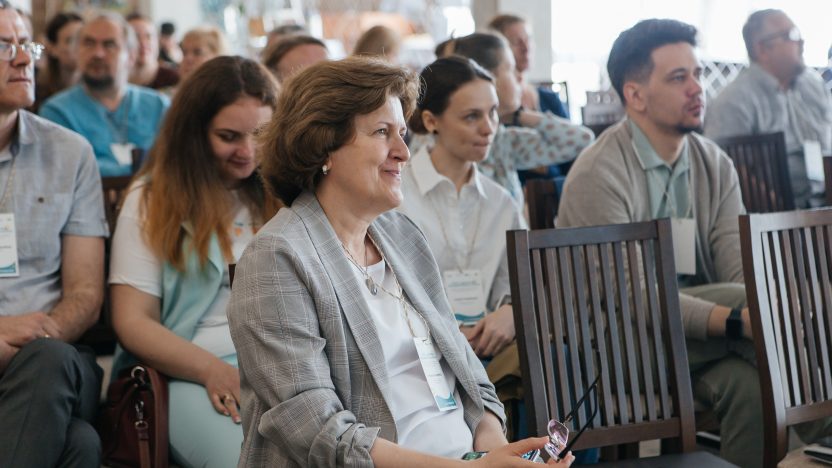
24-25 May Ecological Initiative of the "Renaissance" Foundation (EVEN MORE) spent her fifth, annual conference. The two-day discussion was devoted to the reform of waste management. The lion's share of participants' reports and discussions concerned waste, produced by full-scale war, and reforming the system of their management in the context of restoration and European integration - processes, which should be planned in advance, and act now.
The conference was held with the financial support of Sweden, with the assistance of which the "Renaissance" Foundation has been implementing the EPAIU Ecological Initiative for five years, aimed at the development of public organizations, who work in the environmental field.
Co-organizer of the event - NGO "Zero Waste Lviv", which is part of the institutional cohort of the EPAIU Initiative and has many years of experience and expertise in the topic of waste management. During two days, ecologists, public, business and government discussed and looked for optimal solutions for our country in the field, which only at first glance seems secondary during the war. However, if you "dig deeper", can be seen, that the topic of waste concerns the strategic processes of Ukraine's recovery during and after the war, and household problems at the community level. And the difficult and brutal period of the war is at the same time a period of change and hope. Hope for the European future of Ukraine in the European community. And this is preceded by reforms, in particular, waste management systems.
"From practices to reform: waste management system in the context of recovery of Ukraine, European integration and climate change". The Fifth Annual EPAIU Conference was held under this name.
Representatives of a dozen organizations joined the discussion, engaged in environmental protection activities, advocate sustainable and "green" solutions, investigate environmental problems and look for practical ways to solve them. Among them are grantees of the Ecological Initiative of the "Renaissance" Foundation, as well as partners from other areas of his work: development of analytical centers, territorial communities and implementation of European integration policies in Ukraine. There were also representatives of local authorities and the Ministry of Environment, because the dialogue with the direct executors of the recovery plan of Ukraine is important at all its stages. Foreign experience and successful practices were interesting, which were shared by experts from other European countries, in particular Sweden, of Italy and the Zero Waste Europe network.
The full recording of the two days of the conference can be viewed right now on the pages of the "Renaissance" and "Zero Waste Lviv" foundations, or on the Facebook event page.
Although the war shifted the emphasis from environmental reforms, she failed to divert attention from the environment as such. One can be proud and admire Ukrainians' resilience and environmental commitment. Example, to take part in the panel discussion "Waste of War: what to do?” one of the participants - Maxim Bubruenko from LLP "Ecological Initiatives" – joined the broadcast directly from the front, because now he defends our country as part of the Armed Forces. And the speech of the deputy mayor of the Khmelnytskyi City Council Mykola Vavryshchuk accompanied by an air raid alert in his city. But these are the realities in which we live, and in spite of everything we gather together, to plan human-centered and environment-oriented recovery and reform.
State of the environment today, like never before, on time. Russians destroy not only our homes, but also entire ecosystems and protected areas. The destructive force of Russian aggression threatens our lives now and our future, because Ukraine and the world will feel the consequences of Russia's environmental crimes even after victory. Fortunately, and the state and civil society of Ukraine are already reacting to the potential threat - they are monitoring the situation, evaluate the possible consequences, plan further actions.
Therefore, we allocated a significant place in the discussions to the question of the role of public eco-organizations in the waste management system, and as in the hard impact sense (impact on the formation of the legislative and regulatory framework), as well as in soft impact - changing the attitude of ordinary citizens, changing the situation at the "grassroots level" through the introduction of driving models of practices, which are tested and implemented by public organizations.
They made introductory speeches Oleksandr Sushko, Executive Director of the "Renaissance" Foundation and Maria Lindgren-Saltanova, Deputy Head of Mission of the Embassy of Sweden in Ukraine.
"The war continues, and we do not know its final price. But we know for sure - after the victory, Ukraine must become different. European integration provides a number of chances to modernize Ukraine, using best practices, tested in other countries", - he said Oleksandr Sushko.
He also noted, that although the topic of waste management is, like, technocratic sphere, it significantly affects people's lives: "It is not for nothing that there is now so much talk about littering the planet - scientists have long signaled the overloading of the planet with waste. The European Union has sufficiently advanced waste management standards, and Ukraine has the time and opportunity to attract his help, to rely on proven solutions and technologies. Despite the drama of the moment, in which we are, there is awareness - we have nowhere to postpone. To answer the question "what will Ukraine be like?"?” and “what will be the restoration of the whole country?"I need it now.".
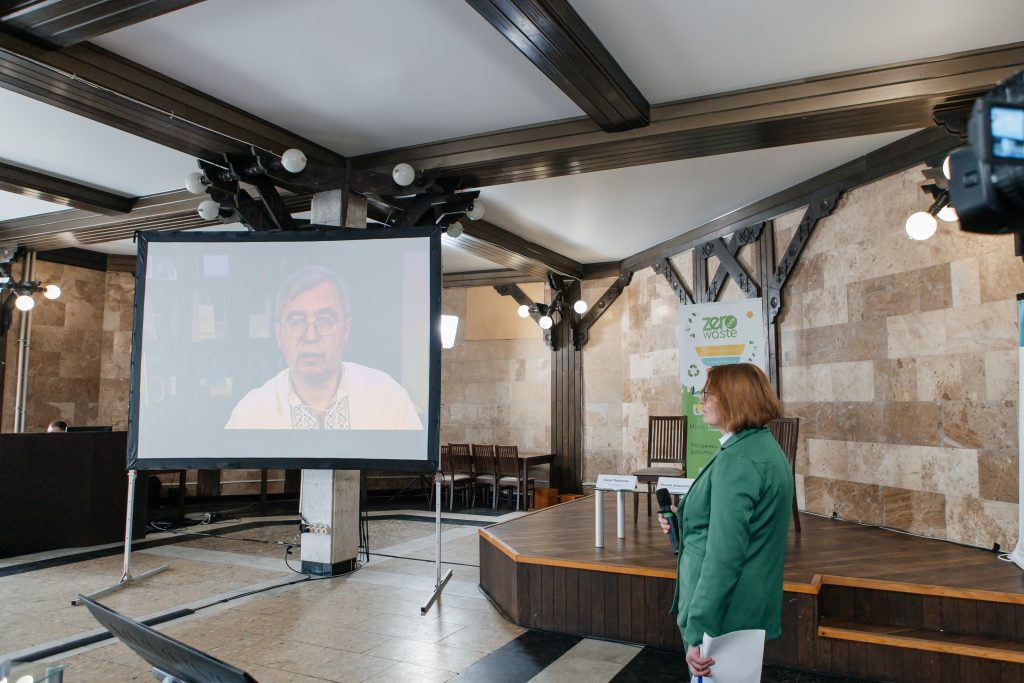
Maria Lindgren-Saltanova noted, that Sweden's support for Ukraine in the field of environmental protection was and remains constant. And not only because of that, that the whole world supports Ukraine. They, what are we doing here, it is important for the European Union itself:
"Climate neutrality and work on waste reduction, supporting the implementation of the principles of the circular economy and the long-term sustainability of processes is one of the priority areas of the EU. Therefore, this conference is taking place at a very appropriate time. Ukraine is working on reforms - there is political will, there is momentum – and that is important in the context of the current effort.” - she remarked.
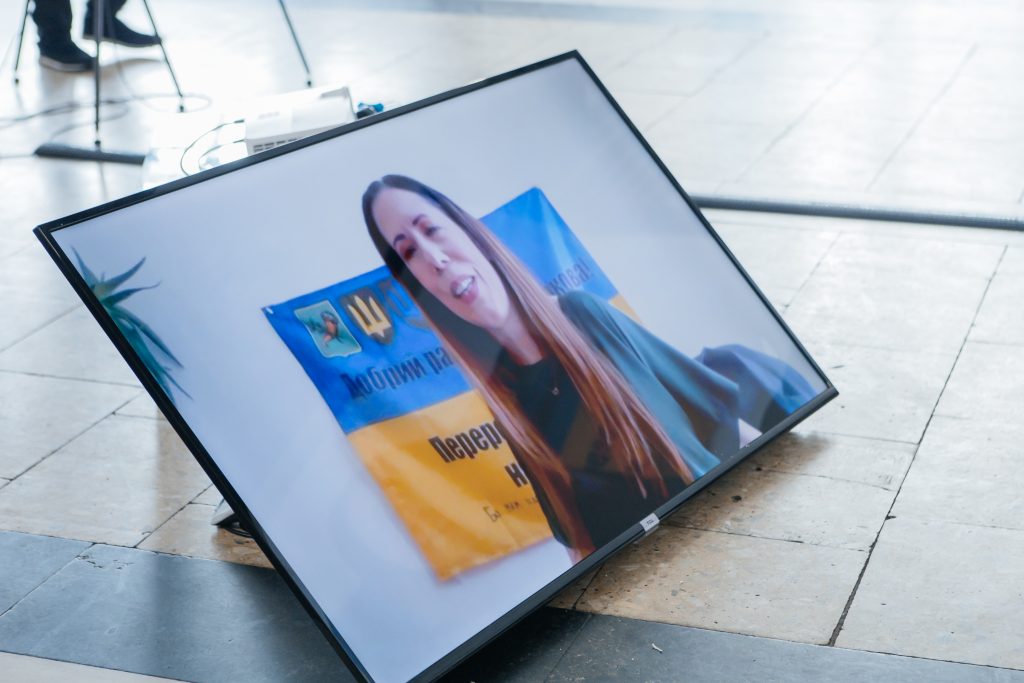
The thematic part of the conference began with the panel "Reform of waste management in Ukraine in the context of recovery and the European Green Course". It was moderated by the manager of the "Renaissance" fund Oksana Dashkakivska. He spoke about the progress of the reform and readiness for the entry into force of the law on waste management and its relevance to the context of Ukraine's recovery Roman Filonenko (Ministry of Environmental Protection and Natural Resources).
Cases of Sweden - countries, which has experience in the best technologies in waste management, presented Wayne Wyquist from the Swedish Waste Management Association, ex-head of a waste processing enterprise in the city of Malmö. In his opinion, the driving forces of the waste management system are technologies for deep processing of waste for reuse, rules, laws, norms, which are accepted at all levels of management and most importantly - acceptance by residents.
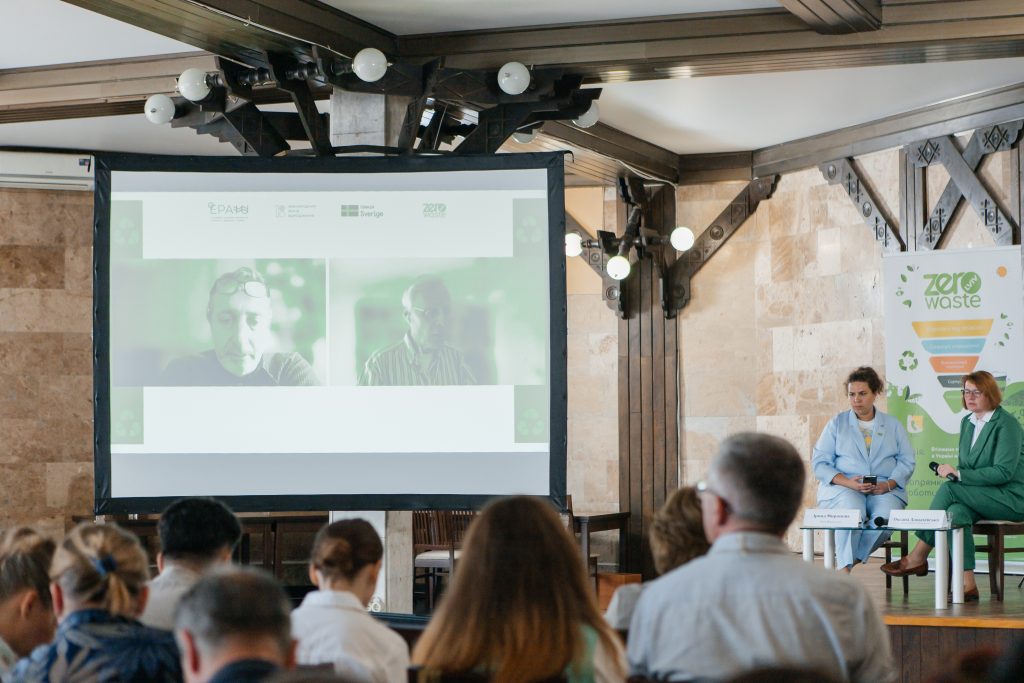
Enzo Favoino, the scientific director of Zero Waste Europe explained why the approach of zero waste cities (zero waste cities) is key to proper waste management reform, spoke about the work of zero waste in the operational aspect and the "pay for that" system, what are you throwing away".
"Our common global goal is to minimize residual waste. Separate collection of organic matter is important, because it has a significant impact on increasing the recycling cycle, as well as climate change. And that's it, what should and can be done in big cities. … If there is proper communication and an established process, then everything works. For example, after the full-scale invasion of Ukraine, the number of Ukrainians, who live in Milan, doubled, to 20 000 persons. And they all quickly learned how to properly sort waste. An established system stimulates behavioral changes", Enzo Favoino emphasized.
The executive director of the organization told about the activities of the NGO "Zero waste Lviv" to help the Lviv municipality implement the use of tools on the way to the city's zero waste status Iryna Myronova. "The presented cases of Sweden and Italy for Ukraine can serve as an example. Waste management, it's not just about sorting. That's about everything: about our attitude to everyday life, habits, consequences, of the future", - she remarked.
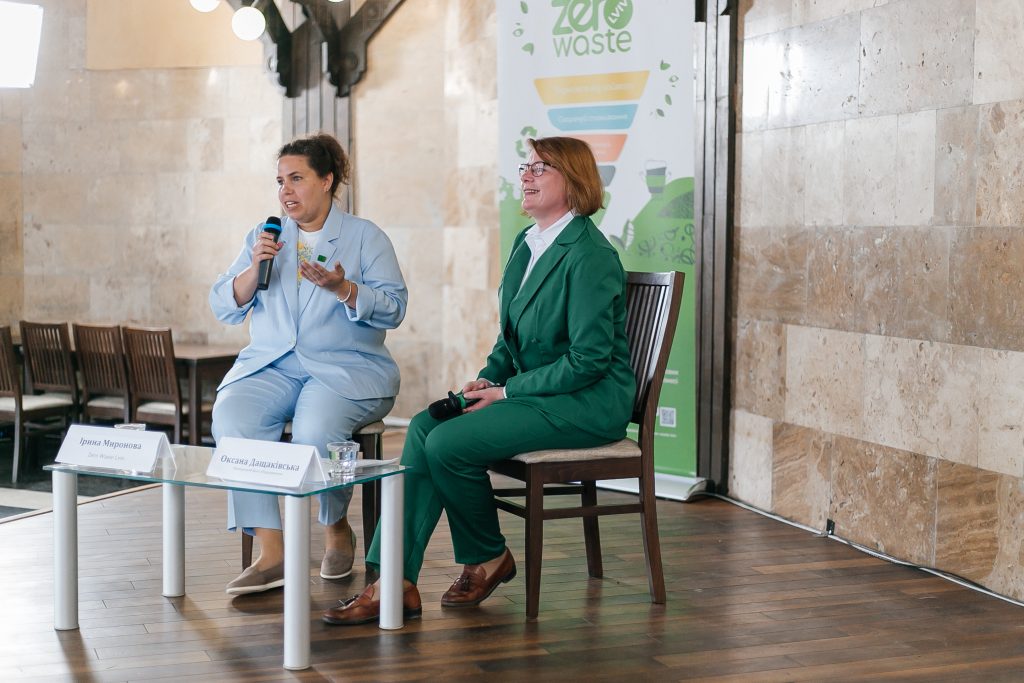
"We all need to work a lot on framework agreements for waste disposal legislation, waste behavior, waste management at the national level. I wish we could, as a civil society, did not forget, that much remains to be resolved at the community level. It's a pity, many more problems lie ahead, after the end of the war. I am impressed by the depth and expertise, which we already acquire in these topics. This may be the conditions before the appearance of pilots, innovative solutions that we will be ready to share", Oksana Daschakivska, manager of the "Renaissance" fund, summarized the discussion.
The issues for discussion in the panel "Industry laws in the field of waste management" were a review of the legislation: draft laws on packaging waste, restriction of circulation of single-use plastic products, the law on restricting the circulation of plastic bags on the territory of Ukraine; the key policy tool is extended producer responsibility and that, how to ensure implementation on the ground; interaction of authorities, business, and communities; legalization of informal waste collectors in the system.
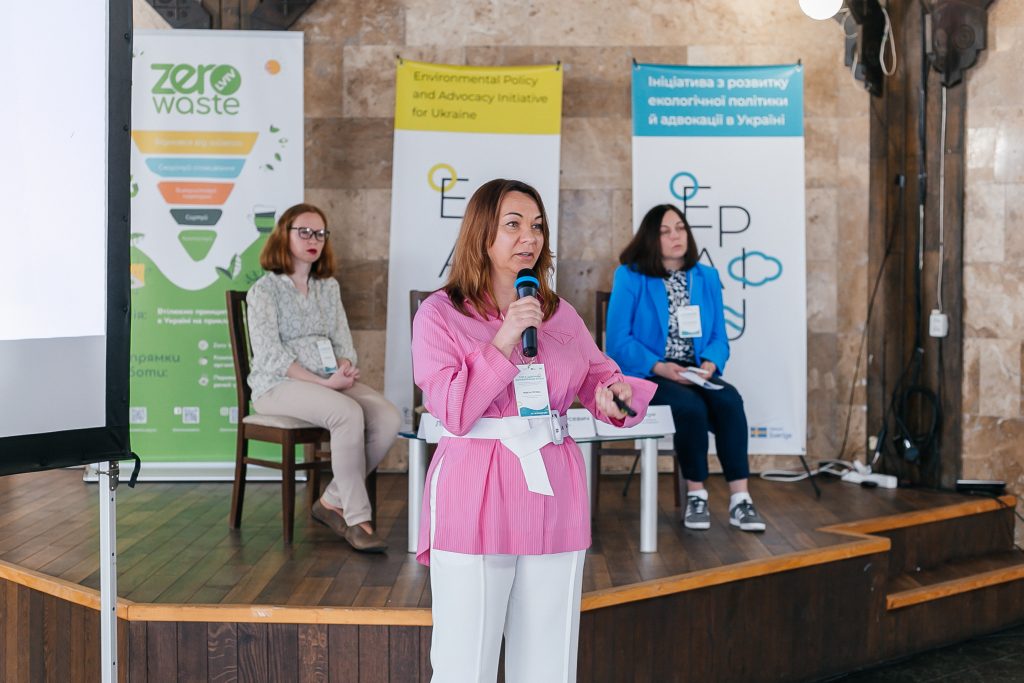
"At the moment, waste in Ukraine is out of control. How many are formed? How much is processed? We do not have exact data. The framework law defines the hierarchy of waste management, as the main principle of state policy", - she noted Tatiana Tevkun, waste management reform manager from the reform support team at the Ministry of Environment.
Mykola Vavryshchuk, Deputy Mayor of Khmelnytsk, added, that reforms are impossible without responsible and motivated people on the ground. And they are. And their motivation is not money, and investments in the future, in a clean environment.
Lyubov Bokalo, analyst of NGO "Zero Waste Lviv", shared the results of a study conducted by the organization on the composition and role of a group of informal collectors of recyclable materials in the city's waste management. You can learn more about him here.
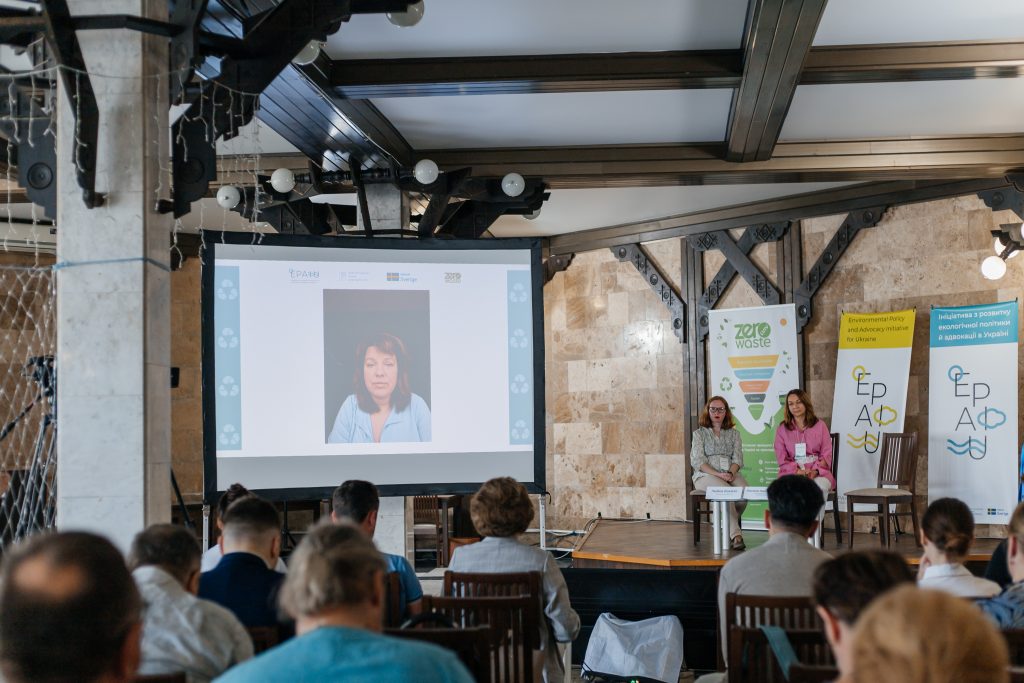
Moderator of this panel Natalya Andrusevich (Resource and Analytical Center "Society and Environment") remarked, that there is a lot of work ahead at different levels: politicians, legislation, practical implementation. "We heard many examples of the activity of public organizations, activists, and it is inspiring. But we need to fix all these things at the level of legislation, to establish responsibility, lay down all the important details in the laws. Therefore, it is very important to hear from communities, cities. There remains a large layer of work with residents, citizens. And it is in the power of public organizations to work with them, to teach, convince", - she added.
About that, how public organizations implement waste management practices in their communities and what they do to encourage eco-habits among local residents, especially among young people, told Tetyana Zhavzharova (GO "Ecosens", m. Zaporozhye), Natalia Starodubets (NGO "Bery and Glory", m. Berislav - m. Drohobych), Ivan Kalosha (NGO "Zaporizhia without garbage", m. Zaporozhye), Olena Savchenko (NGO "Women and Children with Disabilities of Northern Donbass", m. Kramatorsk - city. Ivano-Frankivsk).
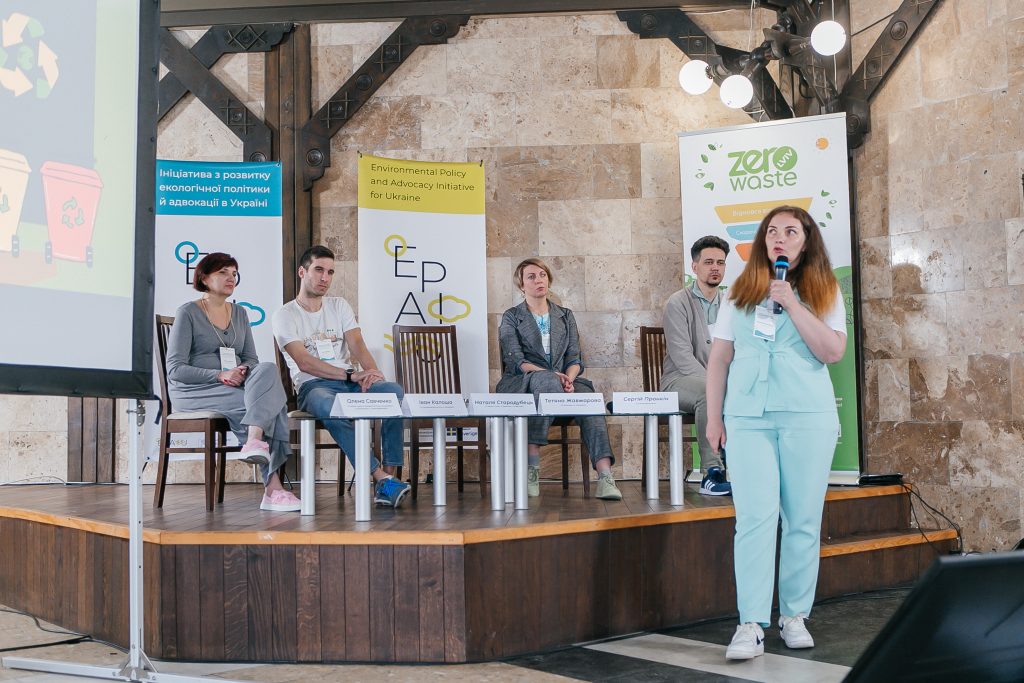
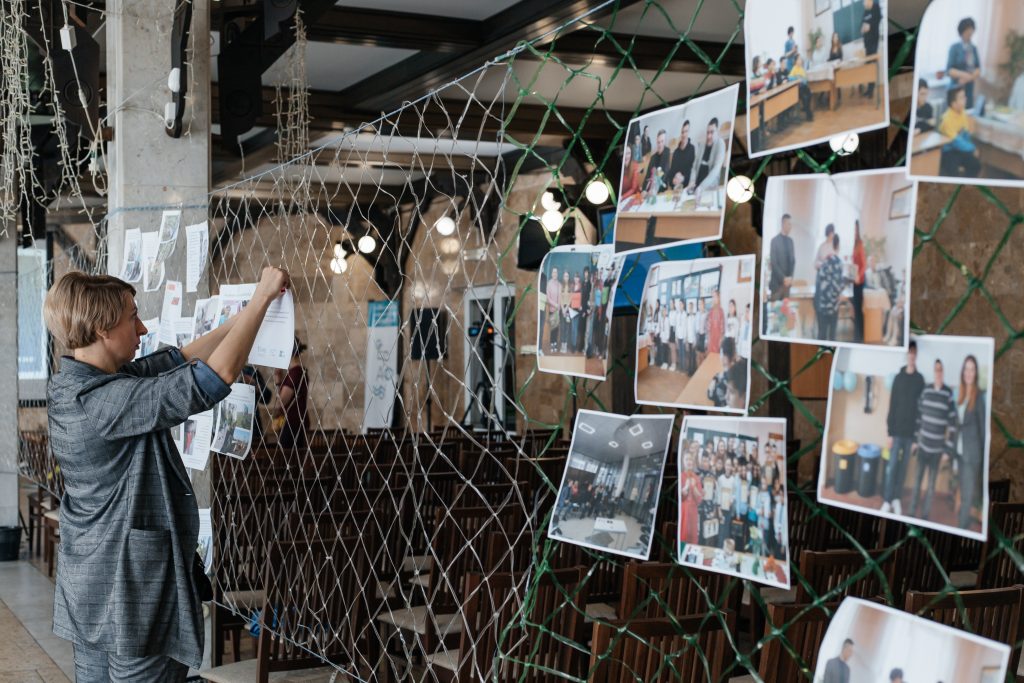
Lectures on "ecopsychology", workshops, plogging, planting trees, Saturday workers weaving camouflage nets from leftover fabrics and proactive communication with people - these small steps at the level of even one small community can become the beginning of wider changes. Because their beginning lies in the plane of fusion of new eco-oriented skills. Initiatives, which speakers and the speaker of this panel presented to the participants, were supported by the Eco-initiative of the "Renaissance" fund within the framework of the competition for small grants for organizations from the south and east of Ukraine.
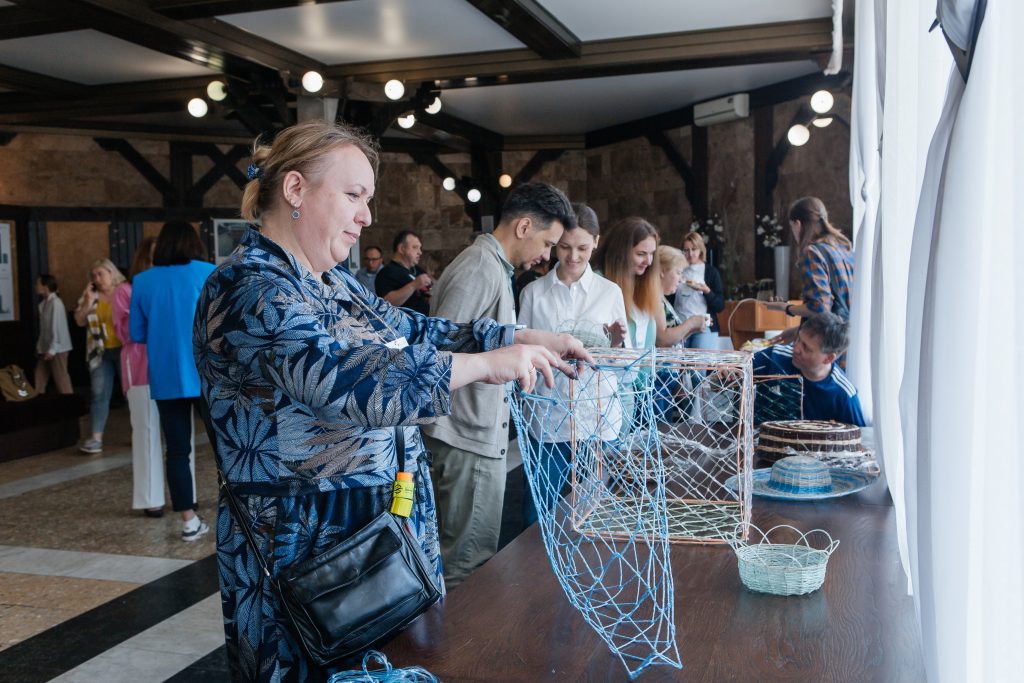
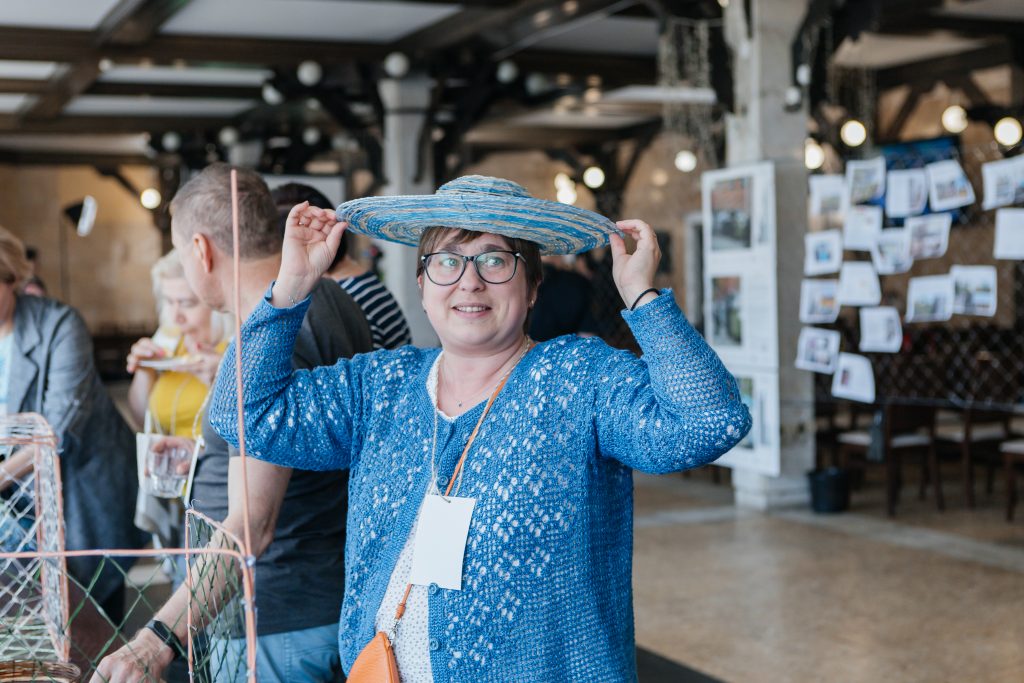
Projects, who presented Olena Savchenko and Tetyana Zhavzharova, also prove that garbage can be useful and can be made from it as an interesting art object, and applied things. By the way, the Ecosens team also prepared an exhibition of upcycling products, created by the "green master" Dmitro Korshikov.
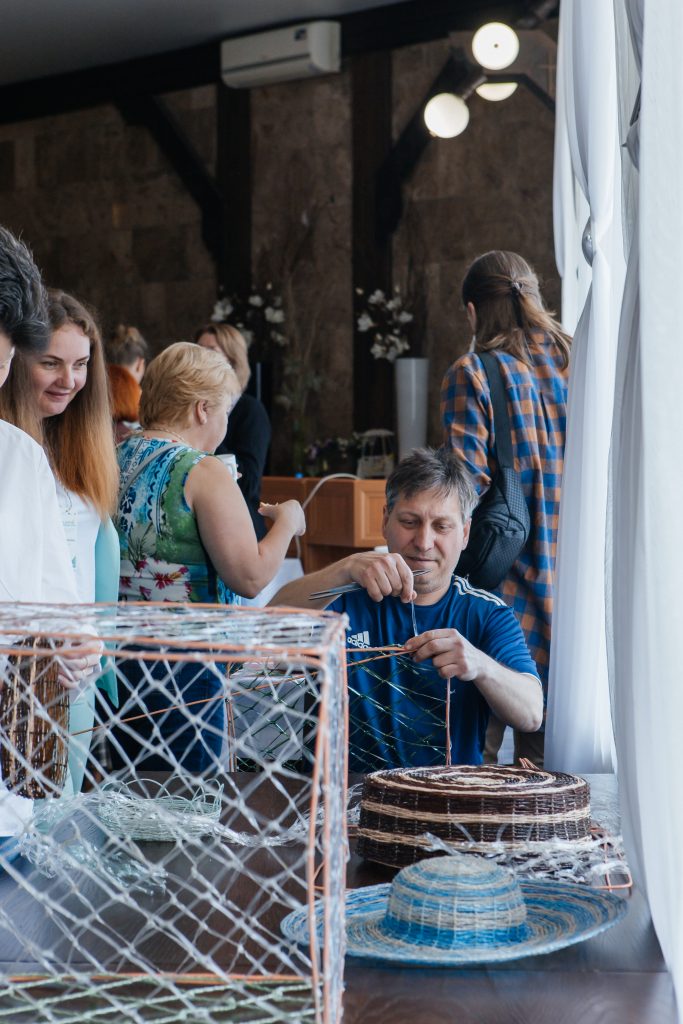
Natalia Starodubets from the NGO "Bery and Slav" explained how their organization works with young people, by creating a sorting station at the base of the school in Drohobych. The "Take and Glory" team also conducts educational events for children and teenagers, and in February held the contest "We are eco-conscious children of the future", in the framework of which children created videos on Tik-Tok about eco-sorting, painted posters, paintings and made "repairs" from recycled materials.
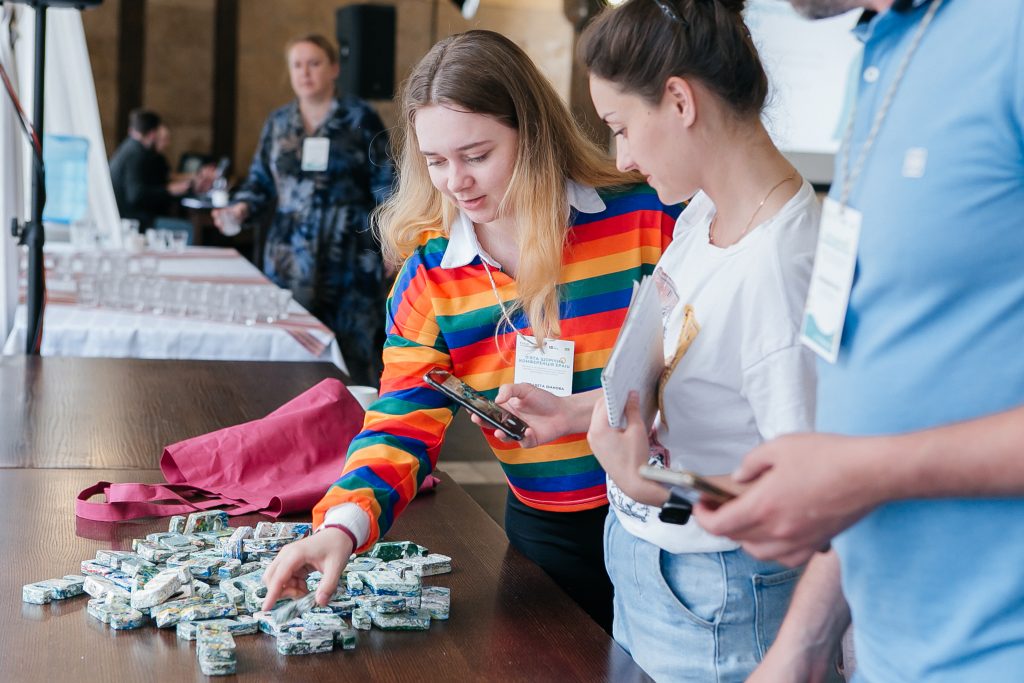
Ivan Kalosha from "Zaporizhia without trash" presented their project on collecting lids, from which the team then created a bench in a local park. So they showed, that eco-habits can provide the community with necessary and useful things.
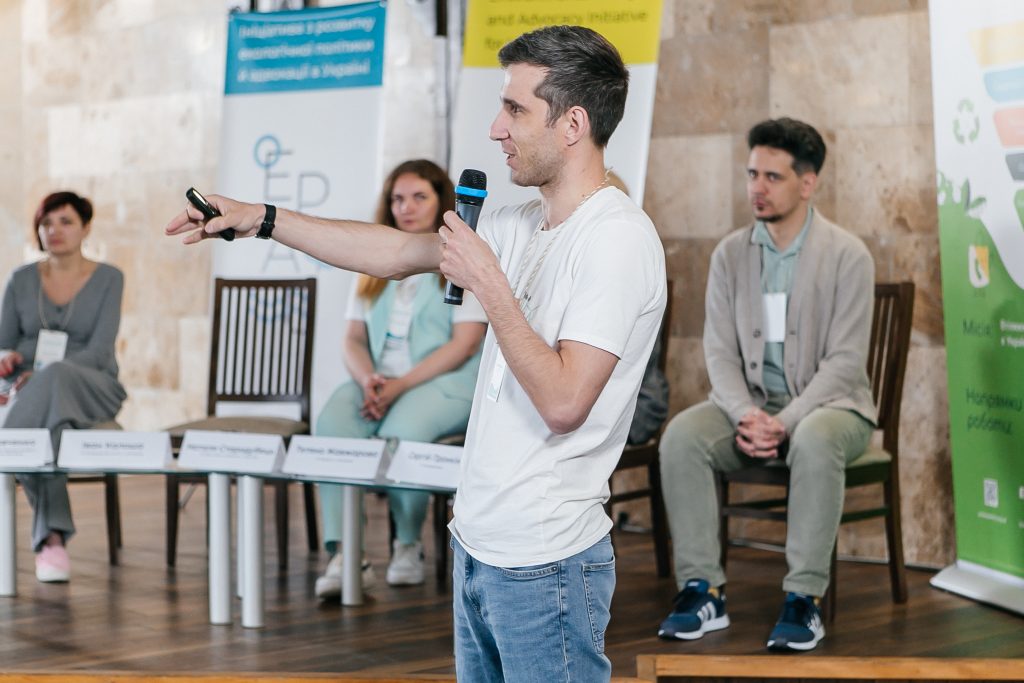
"Ecologically successful Ukraine in the future is a synergy of law makers, which produce laws, experts, executive power and civil society, public organizations, who work in the field, in communities. Their contribution should not be devalued or underestimated, if they work in small communities. All together we are doing a very important thing. And this synergy will help us all", - remarked Sergey Pronkin, head of NGO "Nova Druzhkivka", moderator of this panel.
We paid a lot of attention to the topic "Waste of war: practices of public organizations in solving the problem". It was about waste destruction and waste processing in war and post-war times.
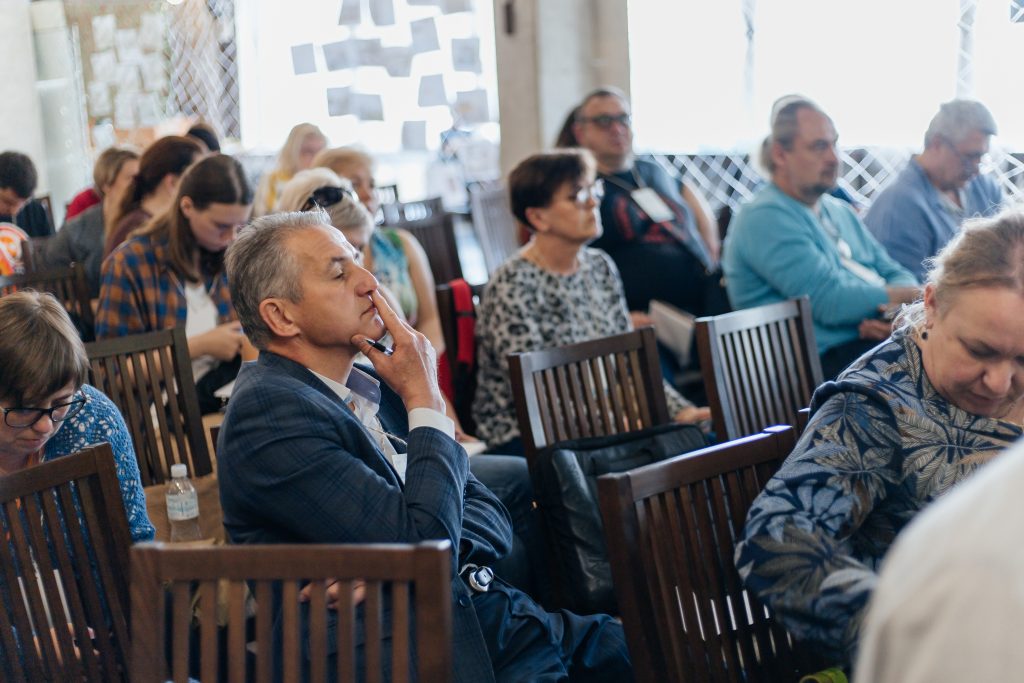
Hope Kuguk from the NGO "Zero Waste Lviv" talked about the decision, that their organization offered to the city, in order to reduce the volume of waste in the humanitarian headquarters of Lviv - reusable gastro containers for food delivery instead of single-use packaging, reverse dishes and containers, instead of disposable, dishwashers for establishments, who prepared food for IDPs, etc. The experience was also shared Anna Ambrosova from the public union "Enough to poison Kryvyi Rih". Now the organization is conducting a study of destruction waste. "What is the waste of war? These are unexploded shells and fragments from them, burnt transport and military equipment, used disposable NLAW systems, batteries and building ruins. All of this also contains hazardous waste," Anna explained. She also presented the interim results of the study and the necessary steps to overcome a possible crisis with this waste.
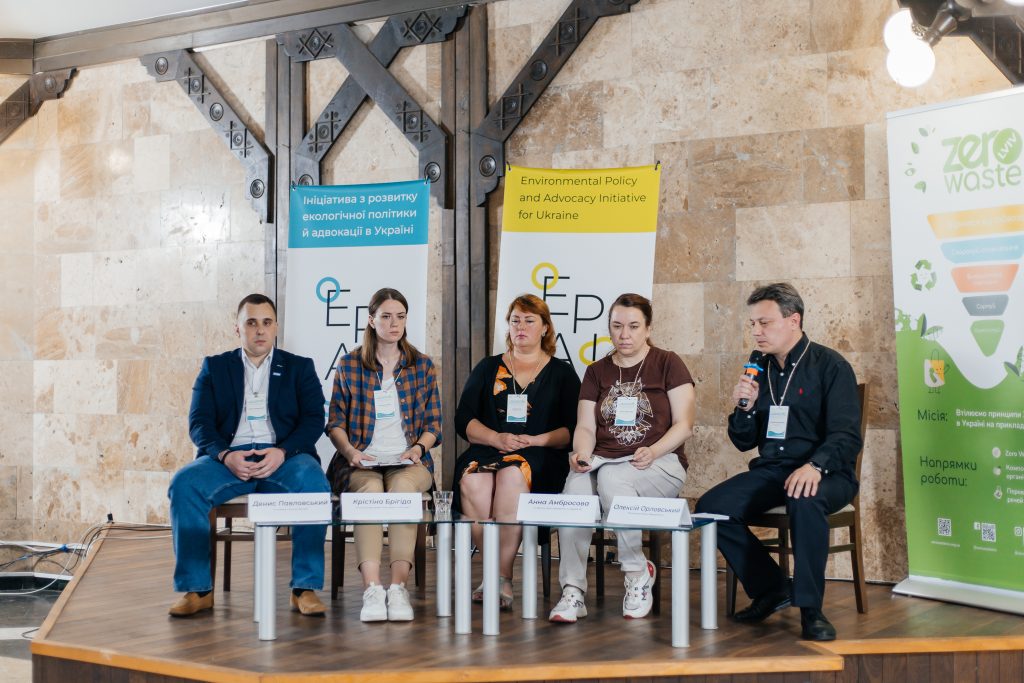
Victoria Shimon spoke about the experience of the French company "Neo-Eko", which only recently entered Ukraine and is trying to find practical solutions for the reconstruction of Ukraine. Their pilot project "Hostomel" is aimed at rebuilding the town through a circular economy. Christina Brigida from "Ekoltava" also shared their results study of solid waste morphology in host communities.
They also took part in the discussion Maxim Bubruenko ("Ecological Initiatives" LLC) you DEnys Pavlovsky (NGO "Chemical Safety Agency"), who talked about the harm of asbestos, which was widely used during construction in the USSR, and is now scattered due to the destruction of buildings.
Oleksiy Orlovsky, director of the "Democracy and Good Governance" program International Foundation "Renaissance", summed up this panel like this: "The war forces us to rethink certain points, which were not thought about or paid attention to before. It motivates us, so that in the process of our reconstruction, renewal of our lives, change that, which was destroyed, we approached the solution of these problems in a different way and acted ecologically."
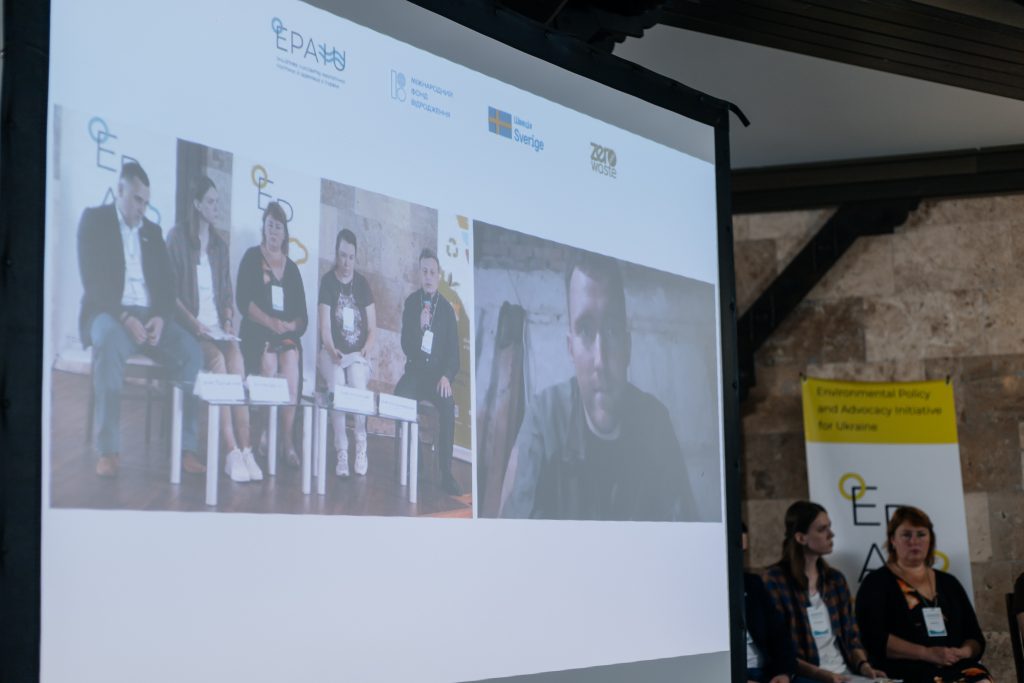
Exactly how? Oleksiy proposed the following solutions - to develop general rules, principles and labeling of waste. “Too bad, we haven't gotten there yet, so that regardless of the place of our physical residence, staying within the borders of Ukraine, we behaved in the same way, had the same rules, approaches, as in Sweden. You have to work a lot and for a long time, to produce the same style, approach, understanding for the whole country. Pleasantly, that international companies are starting to appear here, who are willing to work with this specific complex waste, which are formed during the war. In the first months of the war, we heard and knew little, that there are such practices, and then there was no systematic approach. Now it is getting better," Oleksiy Orlovsky believes.
About the chain of organic waste - biogas production - composting - fertilizer for agriculture, biogas and methane from organic waste as an important source of renewable energy sources told Alberto Confaloneri (Italian Composting Association) and Yamit Naftali (Home Biogas), as part of the last thematic panel of the conference.
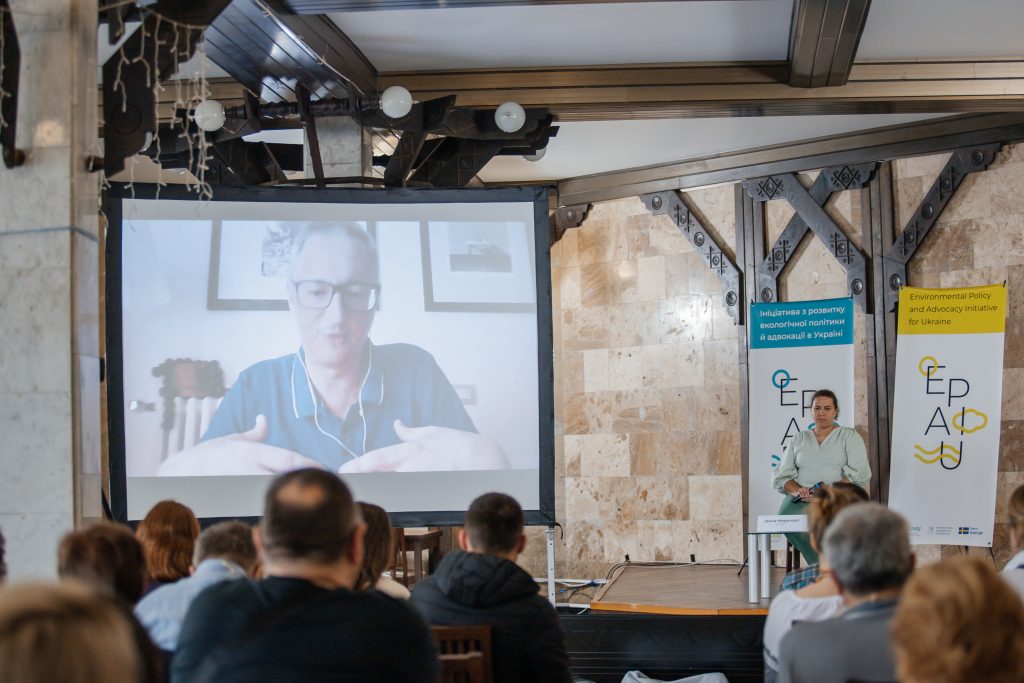
Discussion of decentralized and centralized composting of organic waste, practices in communities, landfill reclamation, waste reduction and organic waste management continued Anna Prokayeva (NGO "Center for Public and Media Initiatives", m. Lubotin), Natalya Senyk (LKP "Green City", m. Lviv) and Mykola Shlapak, climate change expert.
From Zero Waste to Zero Emissions: the case of Lviv based on the materials of the Global Alliance for Incineration Alternatives report was presented by Iryna Myronova, co-author of the report. How the Zero waste city approach helps to reduce greenhouse gas emissions and promote adaptation to climate change Mariella Vilaila (Zero Waste Europe).
Experts also talked about the global initiative to reduce methane emissions and the national action plan on methane emissions from solid waste landfills and agricultural waste.
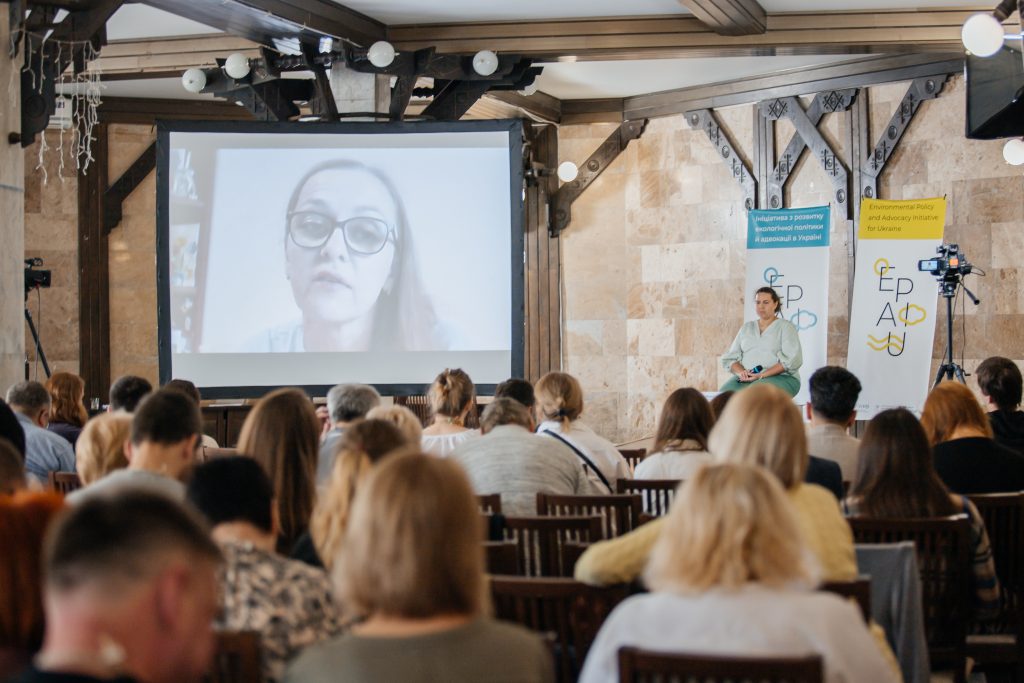
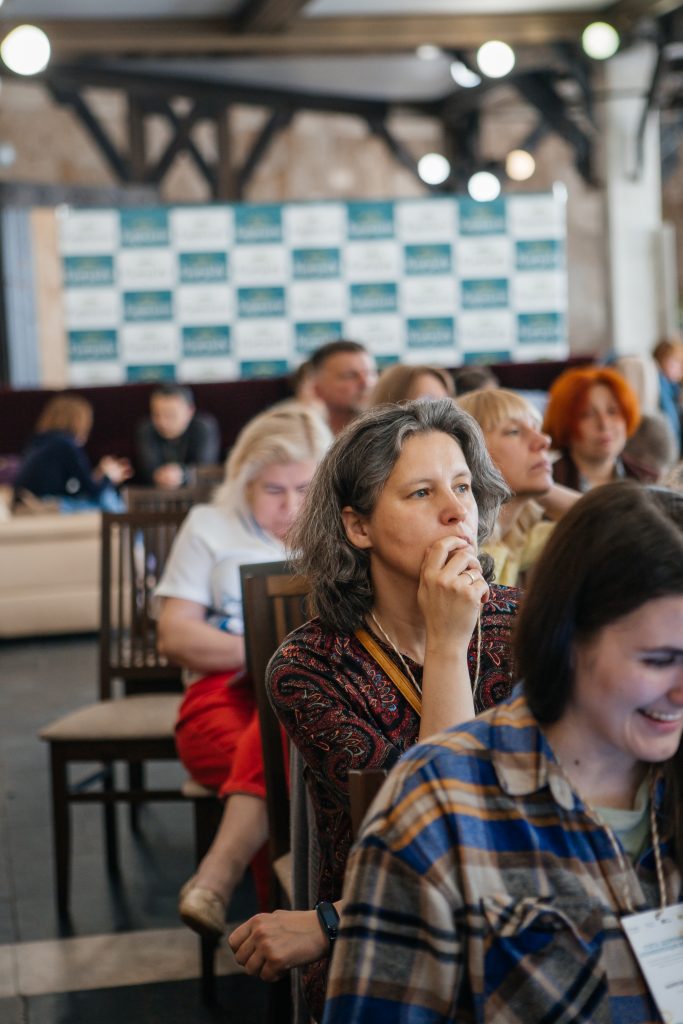
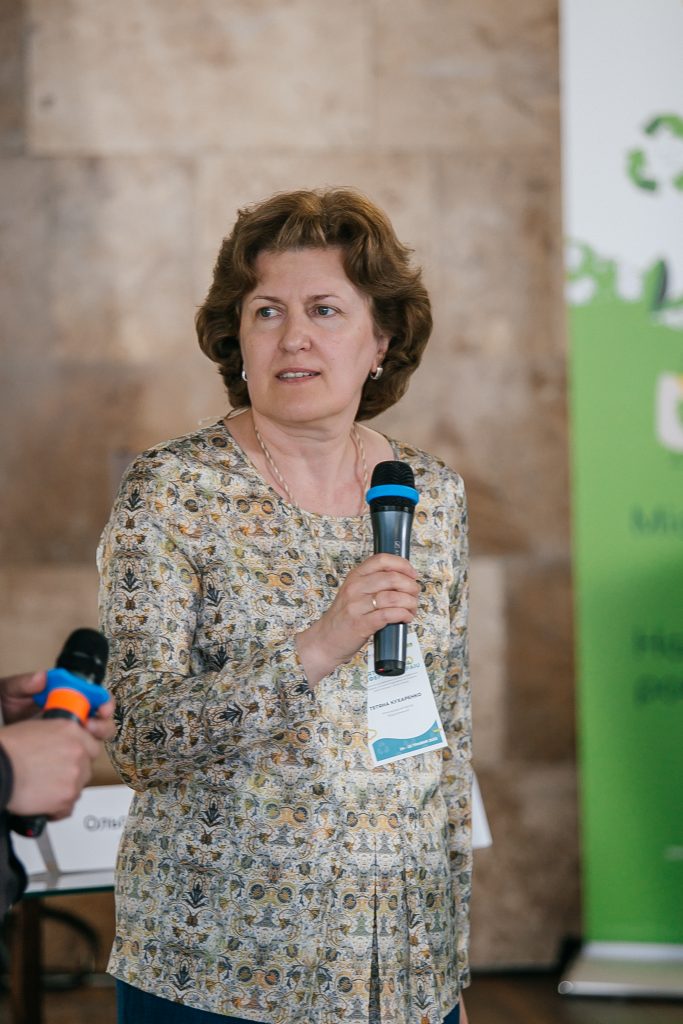
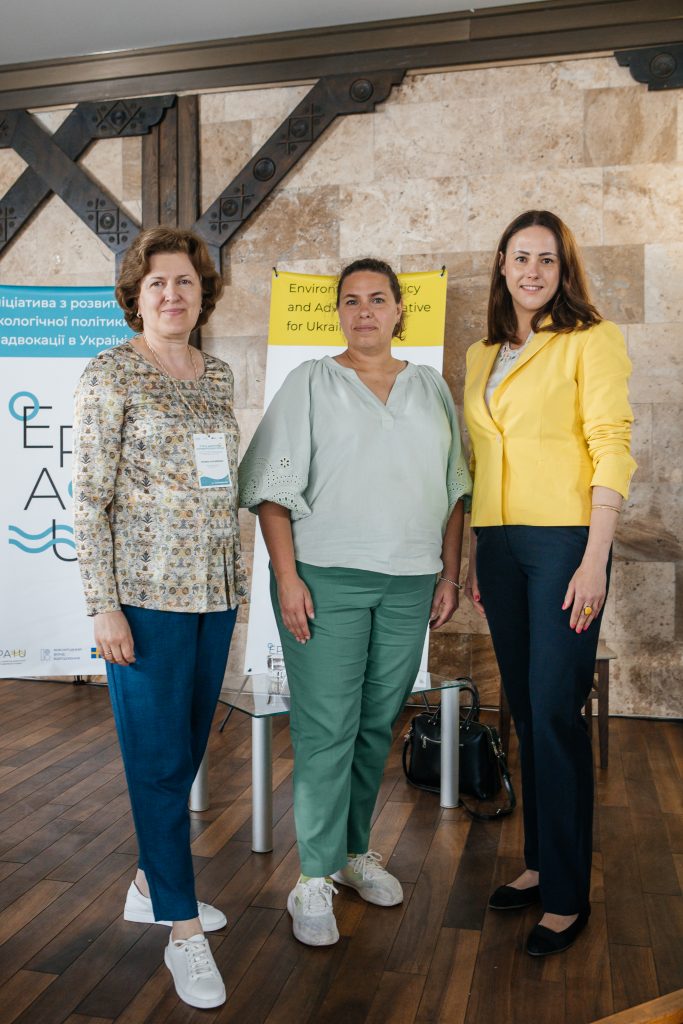
"On the way to European integration and in the process of restoring Ukraine, we have a lot of work ahead of us, and this work must be synergistic. We must join forces to strengthen and strengthen each other. The conference is a platform for communication, exchange of experience, joint work and problem solving", - noted TEtyana Kuharenko, head of the EPAIU Ecological Initiative of the "Renaissance" Foundation.
Iryna Myronova, co-organizer of the conference, also noted: "Waste management is always a relevant topic. In times of war, this is a critical service for host communities, where the population instantly doubles. Accordingly, much more waste is generated, which must be disposed of. Those cities, which had better waste management systems more easily coped with such a load. .. But our task, so that in the future archaeologists do not find too many of them. There is a lot of European, world experience. It must be studied, apply, adapt locally. Although this path is not easy, we see where to move forward".
Review text: Hope Kuguk ("Zero waste Lviv"), Oleksandr Oberenko (International Foundation "Renaissance")
***
We could write a lot more about this conference, but it is better to let them speak for us, for whom the Environmental Initiative EPAIU exists and works - our grantees.
Tetyana Zhavzharova, GO "Ecosens"
Sergey Pronkin, NGO "Nova Druzhkivka"
Evgeny Khlobistov, Crimean Tatar Resource Center
Olga Lyashchuk, CSO "Ecoclub"
Iryna Myronova, NGO "Zero Waste Lviv"
***
The conference was held within the framework of the Initiative for the Development of Environmental Policy and Advocacy in Ukraine, which is carried out by the international foundation "Renaissance" with the financial assistance of Sweden.

SOURCE: https://www.irf.ua/dumaty-pro-zavtra-diyaty-zaraz-pidsumky-pʼyatoyi-shhorichnoyi-konferencziyi-epaiu/